Fatigue shows in the eyes before anyone can see it.
Noddr protects the operator on the yard.
Noddr reads fatigue from inside the safety glasses crews already wear. Built in San Francisco on three decades of peer-reviewed eye research.
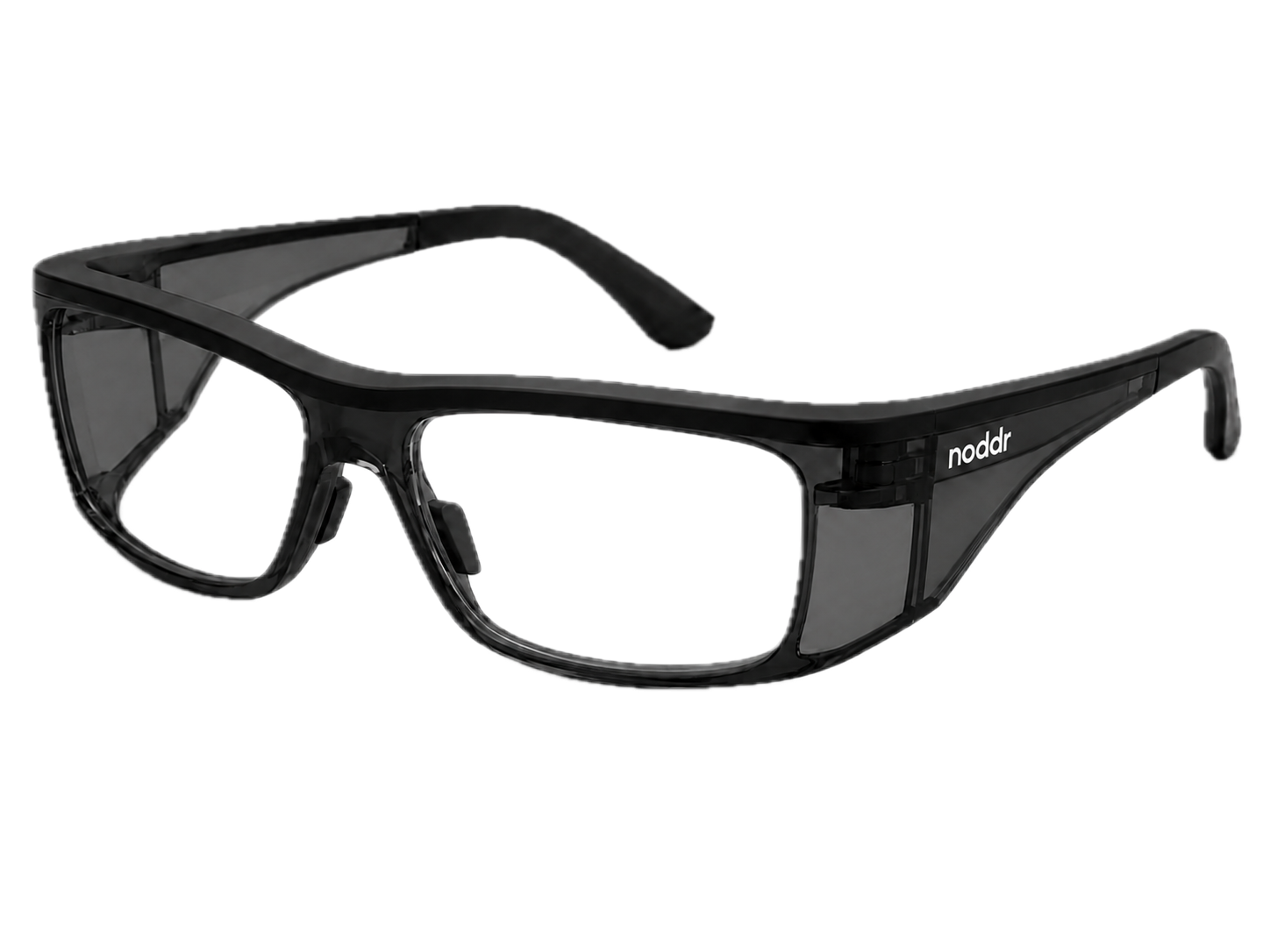
ANSI Z87+ ratingprescription accommodation available






Prior education, research, and fellowship affiliations. These institutions are not customers, partners, or endorsers of Noddr.
Coverage ends when the work continues.
Hour limits measure the schedule. Sign-offs measure belief. Spot checks catch what is already visible.
- Runs a forklift through the back half of a night shift.
- Works on foot among moving equipment.
- Switches between vehicles and manual tasks.
The risk follows the worker. The coverage should too.
Separate measurement from inference.
Raw ocular signals
Eyelid aperture · blink events · pupil trace
Derived variables
PERCLOS · blink dynamics · baseline deltas · signal quality
Fatigue-risk estimate
Inferred state over time, not a diagnosis
Response
Private cue to the worker first
Measurement only matters if it changes what happens next.
Signal shifts
Risk rises
Private worker cue
Worker reassesses
Supervisor, only if unresolved
Logged and closed
The escalation path is agreed with the site before the first shift.
The worker
A private cue when risk rises.
The supervisor
A risk level and a timestamp. Never video.
The event
Logged and closed at the site.
What is established.
References
- 1.Schleicher, R., Galley, N., Briest, S., & Galley, L. (2008). Blinks and saccades as indicators of fatigue in sleepiness warnings: looking tired? Ergonomics, 51(7), 982-1010. Stern, J. A., Boyer, D., & Schroeder, D. (1994). Blink rate: a possible measure of fatigue. Human Factors, 36(2), 285-297.
- 2.Dinges, D. F., & Grace, R. (1998). PERCLOS: a valid psychophysiological measure of alertness as assessed by psychomotor vigilance. FHWA-MCRT-98-006. Wierwille, W. W., Ellsworth, L. A., Wreggit, S. S., Fairbanks, R. J., & Kirn, C. L. (1994). Research on vehicle-based driver status/performance monitoring. NHTSA, DOT HS 808 247.
- 3.Pan, Y., Frisson, S., Federmeier, K. D., & Jensen, O. (2022). Arousal-based pupil modulation is dictated by luminance. Scientific Reports, 12, 1390. Wilhelm, B., Wilhelm, H., Lüdtke, H., Streicher, P., & Adler, M. (1998). Pupillographic assessment of sleepiness in sleep-deprived healthy subjects. Sleep, 21(3), 258-265.
- 4.Niehorster, D. C., Santini, T., Hessels, R. S., Hooge, I. T. C., Kasneci, E., & Nyström, M. (2020). The impact of slippage on the data quality of head-worn eye trackers. Behavior Research Methods, 52, 1140-1160. Naqvi, R. A., Arsalan, M., Batchuluun, G., Yoon, H. S., & Park, K. R. (2018). Deep learning-based gaze detection system for automobile drivers using a NIR camera sensor. Sensors, 18(2), 456.
Evaluate the system where it has to work.
Noddr supplies everything, worn on normal shifts.
1 · What the site gets
Which shifts, hours, and zones concentrate risk. A go or no-go, not a case study.
2 · Duration
Two-week read to start, four-week study for depth.
3 · Consent
Voluntary and individual, separate from employment terms.
4 · Data
Raw eye video is processed on the device and not retained.
5 · Baseline
Every participant baselines individually. The system adapts to the person.
6 · Where it runs
Forklift and yard operations on night and extended shifts.
Noddr protects the shift.It doesn't watch the worker.
Stays on the device
Raw eye video, processed and never stored
Leaves the device
A risk level and a timestamp
Supervisor log
Unresolved events only
Nobody at the site can pull raw eye data, because it was never stored.
Deployment agreements exclude performance evaluation and discipline.
When signal quality drops, the system reports no-signal rather than guessing.
Each deployment receives a written data map.
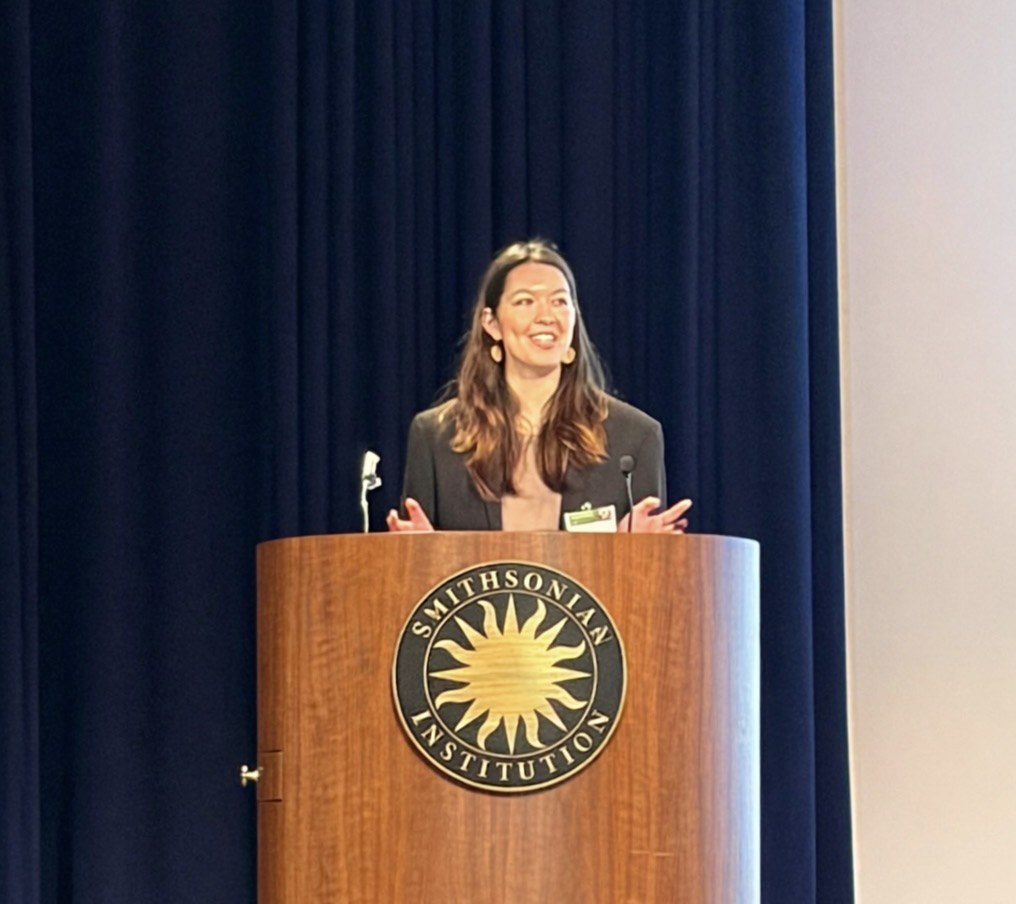
Noddr reads the signals she spent four years measuring.
Ocular and cognitive neuroscience researcher specializing in pupillometry and eye-movement measurement. Published in Neurology, Simons Foundation fellow, with talks at the Vision Sciences Society and the Smithsonian.